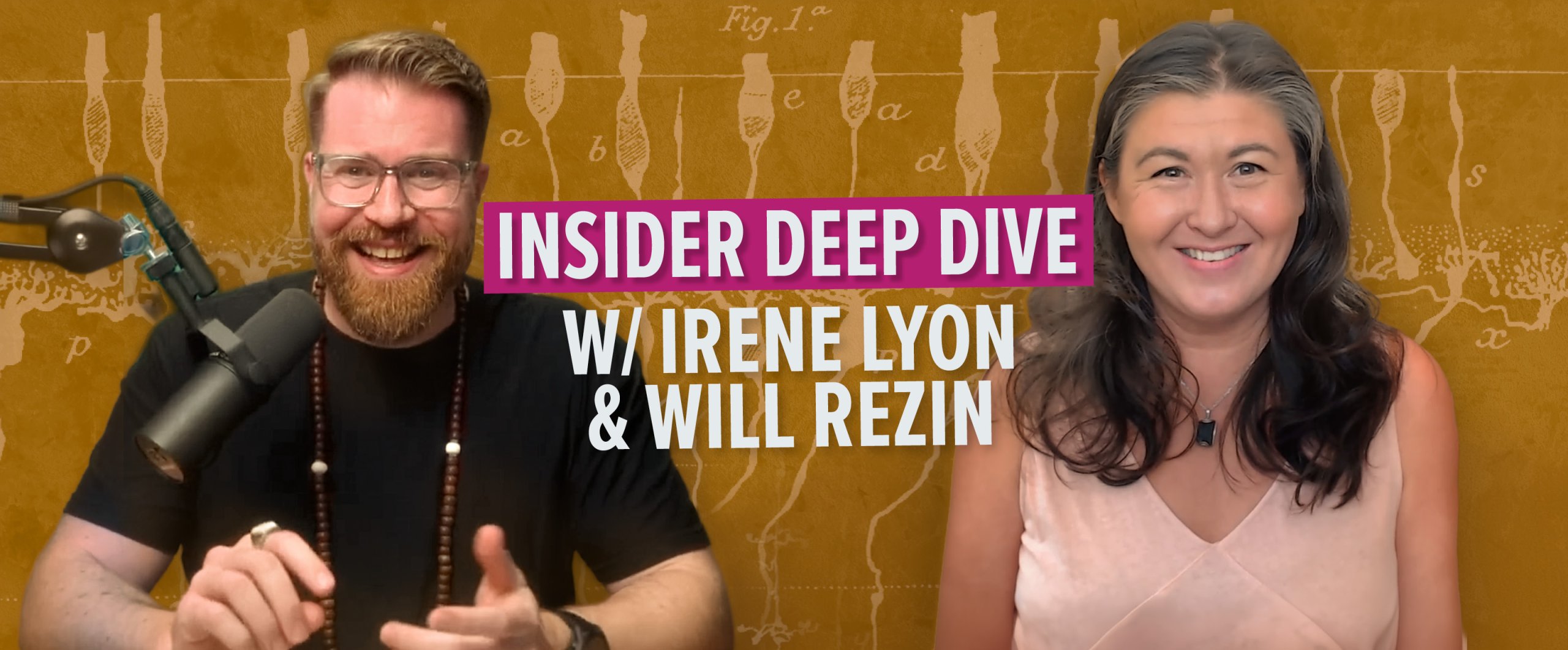
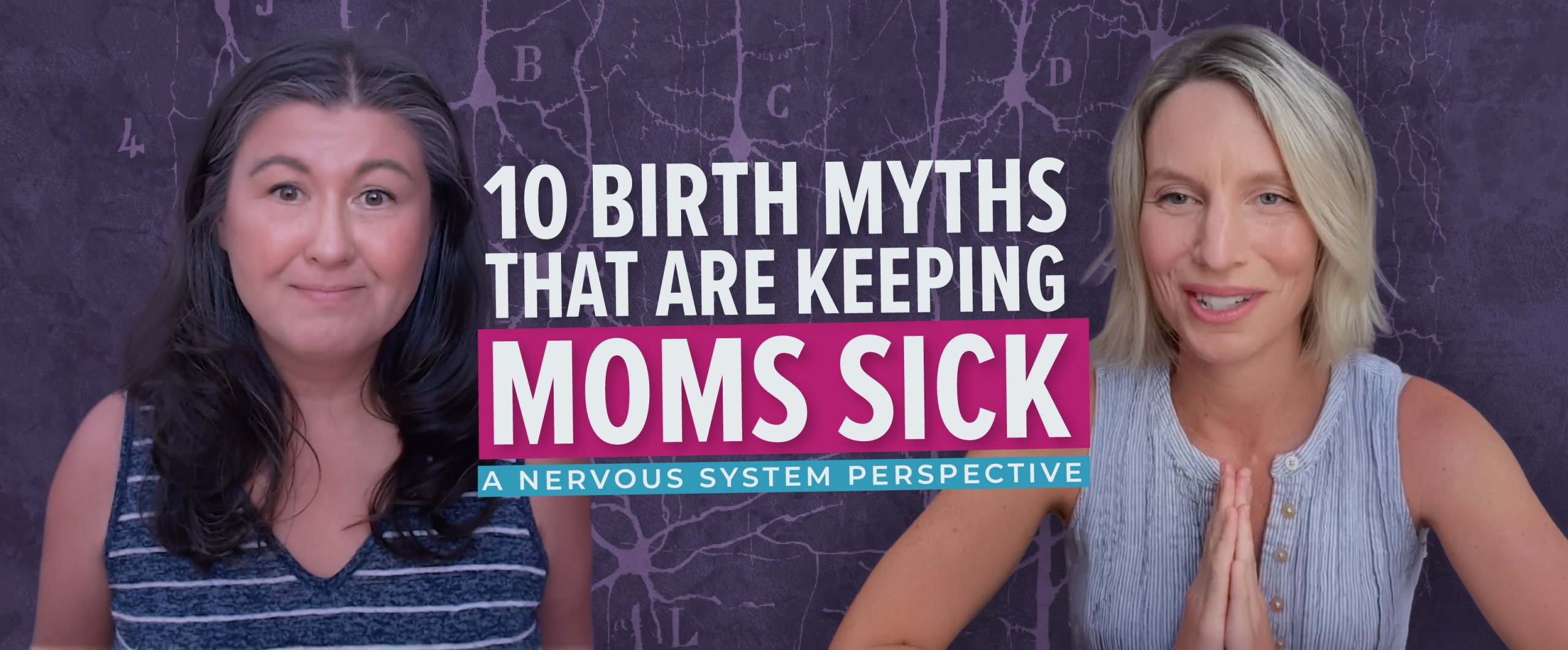
I have a new interview for you that dives into the medicalization of birth and some myths (ten to be exact) that tend to linger around the birth of our fellow humans.
If the connections between nervous system regulation and the birthing process are new to you, I hope you take some time to watch my first long form talk with SmartBody SmartMind™ (SBSM) alum Kait, and then consider taking the time to watch our most recent talk.
The quick version of our first talk is this: Kait had complex PTSD and severe postpartum depression after the birth of her first son, whereas the birth of her second child was, as she calls it, a “night and day” difference in comparison, and the one thing she did differently between those two time points was SBSM.
And while I’m not saying SBSM is the only thing she did, or that it is THE magic bullet for more positive birthing and postpartum outcomes all around, what’s become clear to me in hearing her story, plus the story of other moms I’ve spoken to, is this: real deep nervous system regulation and increased somatic capacity plays an essential part for future humans and their successful entry into this world.
If you’d like more case studies of these observations, watch my talk with Erika, another SBSM student (and I’ll have another one with Anna coming out August 10!).
More on babies, have you seen the Baby Liv video?
Believe it or not, but the ONLY viral video I ever made–923K views on YouTube as of now–was focused on baby movement development, in real-time.
If you read the comments under that Baby Liv video, it’s clear to me that we are craving natural development. We know it in our cells when we see it, here’s one of those comments:
“This is the most epic philosophical video ever of how we are born wise … vs lost.”
Baby Liv portrays one of the key principles taught in SBSM, which is Feldenkraisian learning (and as far as I know, my nervous system regulation course is the only one out there that blends in this kind of learning).
Essentially, this form of learning is all about engaging with self and the environment in new patterns of sensory-motor movement, and it is why I believe we have such a great success rate with re-teaching regulation to full grown adults in my online curriculums.
Feldenkraisian learning sparks up what is in our DNA for naturalistic learning, but many of us didn’t get that in our own infancy or childhood, so this is one reason as to why we pass this strain and tension to our birthing and childrearing ways.
Of course, the good news here, and the ‘thesis’ of this email and these interviews, is that we can change a lot within one generational family system when we have the right ‘ingredients’ to work with.
Final note for you…
If you watch this new talk with Kait, be sure to read the addendum and added points that were not talked about during our talk.
Kait took the time to write these up and send them to me after we completed our discussion.
Here’s that addendum:
“Irene,
Looking back on our chat, there’s something key that I wish we’d spent a bit more time on. (TEN myths might have been a stretch for our hour together haha.)
I know you’ve said there’s a RIGHT way to raise babies. And I think that same concept applies here. There’s a right way to bring a human into the world, and it involves honoring the biological needs of the mother-baby dyad. This isn’t about judgement, it’s just the reality of being a part of nature.
And given the fact that 45% of mothers consider their birth to be traumatic (not to mention how many babies register their birth experience as stressful/overwhelming), we seem to have strayed too far away from nature’s design.
A lot of the birth prep out there reflects our obsession as a society with avoiding pain and discomfort. And I suppose I’m here to make the case for learning to be with sensation instead. Because it’s the avoidance that leads to the dysfunction and problems that so many moms are dealing with later on, never connecting it back to the birth/postpartum period.
Birth is meant to stretch us (literally) and expand our capacity. To transform us. It’s baked brilliantly into nature’s design because this is something we’ll need as we enter motherhood.
People say we birth the way we live. What less people understand is that the way we live is dictated by the health of our nervous system.
So we can do all the cute prep in the world (the breathing exercises, the visualizations, the mantras), but ultimately birth is a physiological process governed by the autonomic nervous system.
(I can see now that my first birth experience reflects where I was in my nervous system at that time. I was completely disconnected from my body/intuition, and I made choices that reflected that.)
I wish more mommas or mommas-to-be knew their options when it comes to birth and postpartum. And that one of the best ways to prepare is to expand our capacity to stay present with sensation, follow biological impulse—essentially ALL THE THINGS your course teaches.
So much love,
Kait
(added points)
What May Necessitate a Hospital-Based Birth
Birth is not inherently a dangerous medical event. AND there are some true high-risk scenarios that may necessitate medical care. Things like: pre-eclampsia, gestational diabetes, low platelets, placenta previa, monochorionic twins.
(Many of the things mentioned above could be prevented with things like movement, diet, and stress management—things the conventional maternity system likely won’t mention during appointments. Instead they’ll label women as “high-risk” for things that aren’t inherently dangerous. Things like breech position, twins, IVF conception, age.)
Optimal Cord Clamping
The placenta contains 30% of the baby’s blood volume. Immediate cord clamping is one of the many interventions that was started without any evidence. Instead, respect the natural physiology of birth and wait for all of the blood, stem cells, and iron to transfer to the baby. There’s a difference between delayed cord clamping (waiting for a minute or two) and optimal cord clamping (waiting for the cord to stop pulsating and turn white). The time of this process varies—some say up to 40 minutes. (I think I said hours during our chat, Irene. Oops. Time was sort of murky after my first son’s arrival.) I’d recommend this episode of the Birthing Instincts podcast for more information.”
* * *
I can’t convey enough how important it is to consider, and understand, plus work with, the full circle of life when it comes to bringing new humans into the world – it really impacts how they will eventually live, survive, and we hope, thrive, into adult years.
We can change a lot in such a short amount of time, and Kait’s story, plus the other moms I’ve gotten to know, are proof of this reality!
* * *
Kait is a certified holistic birth educator (via Eyla Cuenca’s Uncovering Birth Method) and a certified Birth Story Listener (via Pam England’s Birth Story Medicine) on a mission to educate, empower, and support mothers with previous birth trauma who want to bring another baby into the world. Her message to moms is this: your body was never broken and you can have an entirely different experience the next time around.
Eyla Cuenca’s Uncovering Birth Foundations Course (use code KAIT for a 10% discount)