Point #1: Each human is unique. Fingerprints, eyes, experiences, creativity.
Point #2: We have core physiological needs that are undeniably the same: safety, connection, attachment, flow, play, nourishment, hydration, sunlight, and rest.
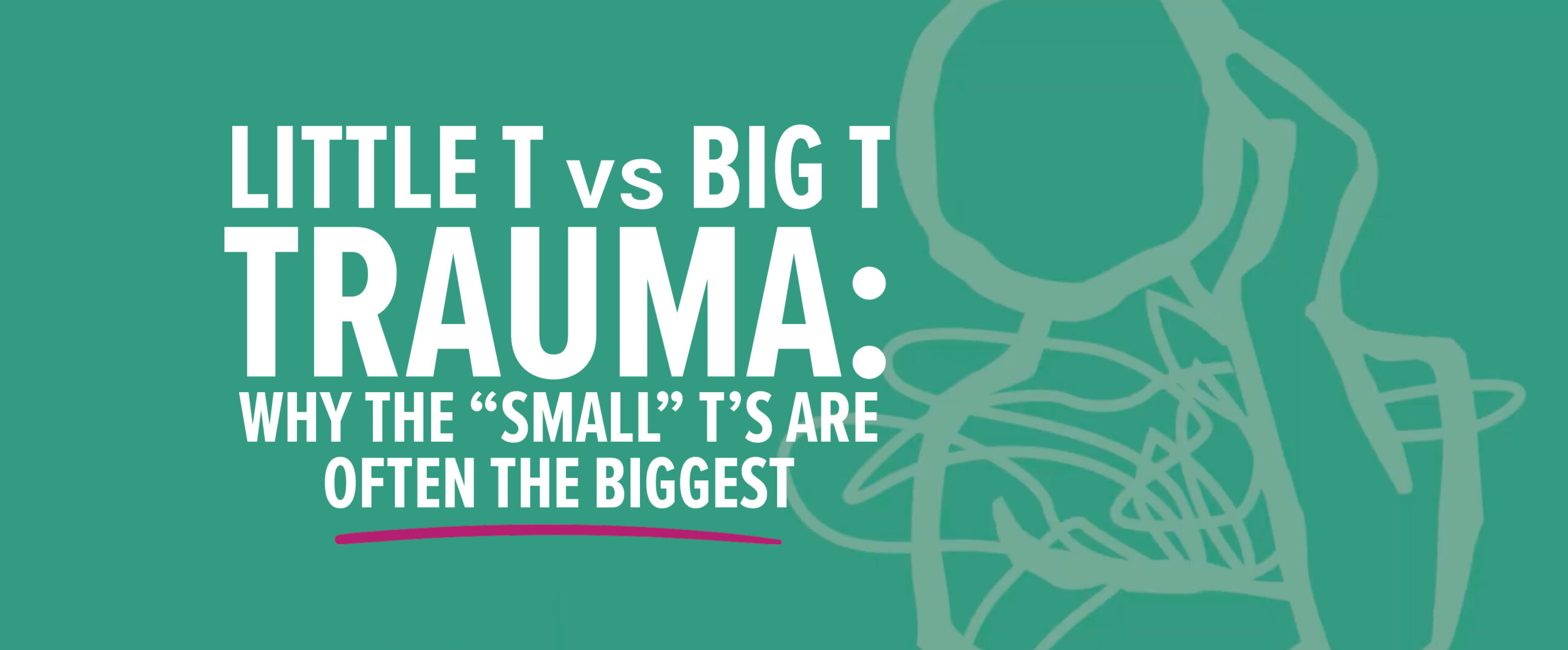
Point #3: How a human experiences hurts and harms (aka trauma) is unique to their interpretation of it. That interpretation is shaped by life experiences, existing regulation, and a myriad of factors too numerous to name right now. Even so, trauma is often broken down into two kinds:
- Shock traumas, often called “BIG T”
- Early and developmental traumas, often called “little t”
What this oversimplification misses is that the “little t’s” can be just as big as the biggest “BIG T” imaginable, if not bigger.
For example, take mild but chronic mis-attunement from a primary caregiver. It might not put a child into severe physiological distress the way a car accident and a broken bone might. But its insidious, often hidden nature seeps into the child’s entire existence and cellular makeup, so much so that they don’t know they’ve been in a slight survival pattern since day one.
Whereas if someone grew up with severe physical abuse as the norm, there was no hiding that it was happening.
Neither of these is good, and both put a human into distress. But the “little t’s” tend to be the trickiest to figure out.
This week I wanted to share a ten-minute audio clip where I talk about these differences:
Ready to start building safety from the inside out so you can finally heal these “t’s” (big and small)? SmartBody SmartMind is my self-paced course that pairs cellular-level safety with the theory that makes it click. Start with Foundations anytime: joinsbsm.com
When you join Foundations, you’ll also be invited to join our SBSM Monthly Membership. Read all about it.