It’s possible you don’t know this about me, but my Masters work was focused on studying what it takes to improve function and strength in older adults.
At the time, I was purely working from an exercise science and biomedical science lens, meaning, I wasn’t aware of what I know now regarding the new traumatology (i.e., how stored trauma impacts the entirety of our health, healing, and vitality).
Decades later, these two very different types of learning (one very reductionist & ‘Cartesian’; the other holistic, still biological, but more energetic) have put things into great perspective for me.
And while my short stint in academia (2000-2002; 2008) is a story for another day, and perhaps I’ll tell it sometime soon, in a nutshell:
The core thesis and findings of my research was this: a person must exercise, especially improve their muscle strength and mass, to maintain all elements of health and well-being (even mental health!).
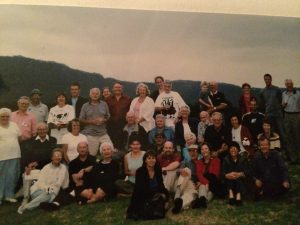
The only photo I have of my ‘subjects’ from this time in my life – this was our post-intervention bbq at North Wollongong Beach.
What I offered to academia was not unknown at this time, but science’s job is to keep proving (or dis-prove) so we can find the truth, and so I added a drop to the masses of research that was first uncovered in the early 80s, and no doubt continues to this day.
But there’s a big “but” that I understand a lot more all these years later, and that’s this:
One can be very physically fit and have superior muscle health, yet they can still succumb to the ill effects of old stored up survival stress (aka: trapped traumatic stress; nervous system dysregulation).
Despite knowing this, I still think it is important to work on physical function and all those important lifestyle behaviours, like nutrition, for example, but I have seen and heard this time and time again in my private practice, and more recently with my online students, and that is that many of these folks are top notch in their lifestyle habits (diet, exercise, mental capacity), but they continue struggle with what we’d call nervous system dysregulation, which can be seen via autoimmune conditions, chronic pain, gut troubles, insomnia, depression, and anxiety, just to name some of the common symptoms.
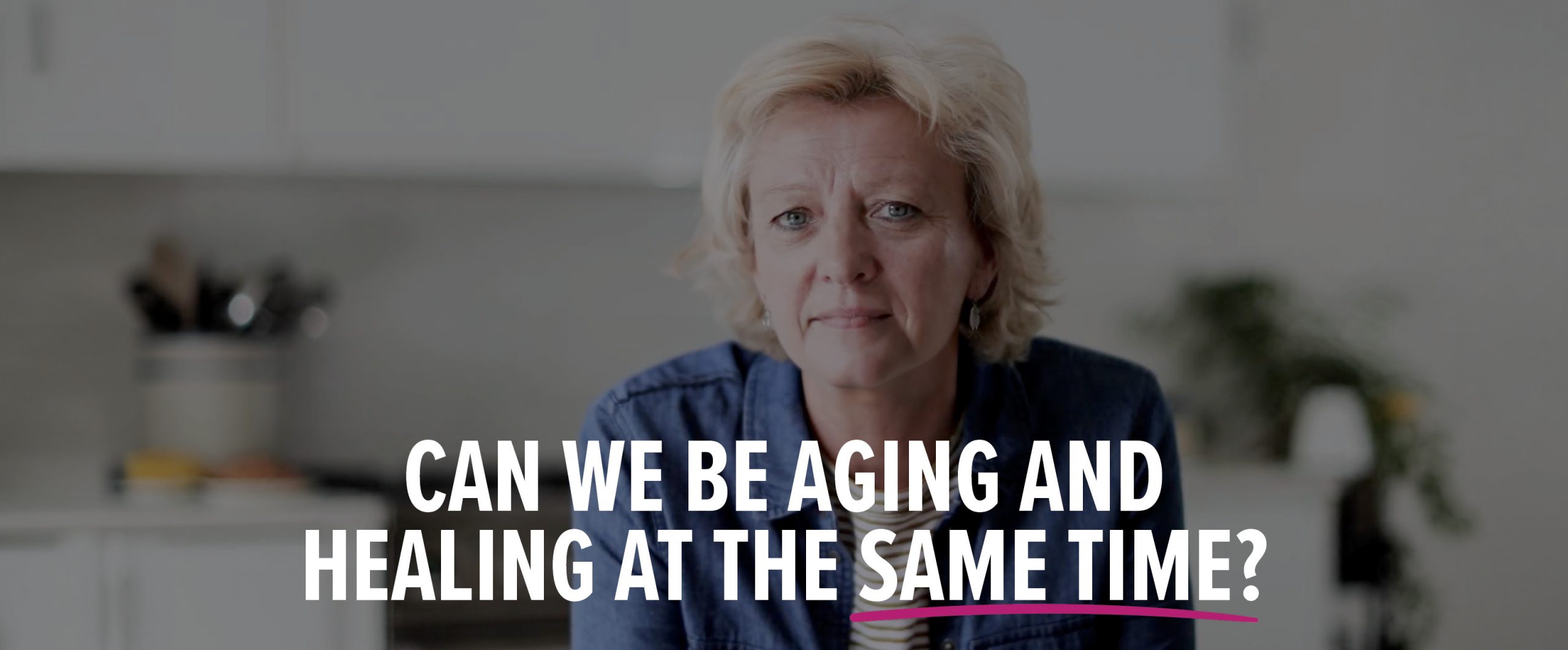
So to answer the question in the subject line:
Can we be aging and healing at the same time?
Yes.
And we can also be doing all the right health things (like exercise, healthy eating, positive relationships, career) but still declining.
Confusing, I know.
It all comes down to what I speak to in this short clip that pulled from a longer talk I did back in 2024, wherein I was teaching a master class on autoimmune disease and nervous system dysregulation.
The core thesis of this new traumatology work (that’s where the work of Peter Levine and his prodigies come in) is that if we have any stored survival stress lingering and lurking in our physiology, and whether we are aware of it or not, it will impact how we rest, digest, and repair.
And if we can’t do this (rest, digest, and repair), we age and decline faster than we should.
PS For the nerds here, if you ever want a long, citation-heavy PDF to read—to ease you into sleep—my master thesis dissertation can be found here.