Pain can be a pain. Trust me. I know.
As someone who has broken countless bones, had numerous reconstructive orthopaedic surgeries, too many whiplashes to count (oh, my poor neck muscles!), one severe concussion, and terrible skin rashes that resembled chemical burns…
I have been through the pain wringer.
I’ve learned how to be with and feel pain in ways I never thought I could.
And, while it is now way easier for me to be with pain and not be scared, I will say this:
Pain still hurts.
But how you process the hurt and how you listen to your thoughts will make all the difference in the world.
And, when done with awareness, processing pain can be medicinal.
Now, there are many different kinds of pain: acute, chronic, emotional (just to name a few).
Within these types of pain, there are also many nuances – too many for me to offer direct instructions in this article on how to work with or heal each specific one.
What I will do, though, is offer a couple of suggestions to help you process one specific type of pain, and that is: non-life threatening physical acute pain.
Because when we can be with this kind of pain, it helps us to be with other kinds of pain.
But first, let’s define some of the more common kinds of pain:
1. Acute, in the moment, physical pain. This could be:
- A broken bone
- A skin burn
- A paper cut
Or, my favourite teaching example…
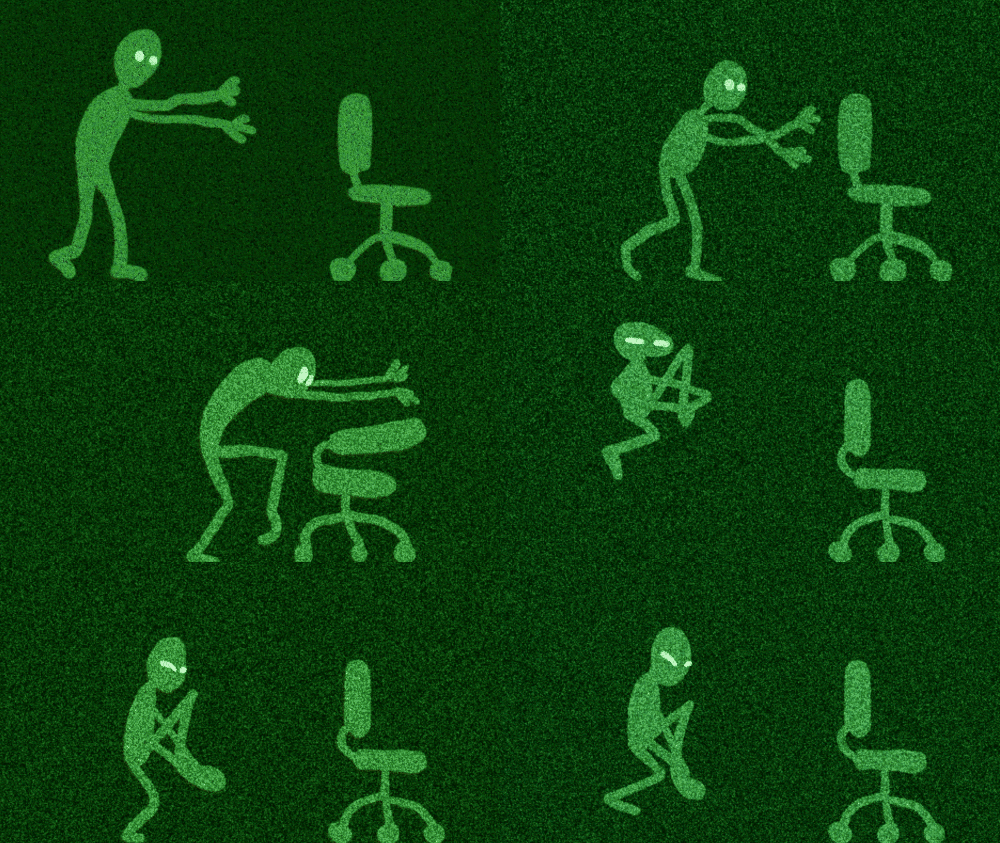
- a stubbed toe!
2. Chronic, joint-specific pain. This could be:
- Knee, hip, or spinal joints that might be sore due to wear and tear over the years, or an old injury that was never properly tended to. The medical establishment would call this osteoarthritis. Typically, this comes with inflammation and limited range of motion
- Back pain from years of poor posture
- Tension headaches from grinding your teeth at night
3. Chronic, whole-body pain (aka: myofascial pain). This is:
- Where the body is just achy and sore all over
- Typical with fibromyalgia and other chronic illnesses of the autoimmune variety
- NOTE: there are deeper reasons for this pain that go beyond this list, but the quick version is: the fight/flight/freeze/collapse survival states of the autonomic nervous system are fighting with each other and this tug-o-war creates actual pain and illness.
4. Emotional pain, like heartbreak, grief, sadness. This can:
- Be experienced as intense sensations in the heart, belly, groin, and throat areas (think chakras!)
- Lead to over-thinking and severe mental rumination when left unchecked
- Lead to dissociation and numbing out (because the pain is just too heavy to cope with, so we switch it off)
All to say…
Not working with and processing pain is not good, because pain that is not properly processed remains in our body and can lead to all kinds of chronic health problems.
That said, here are my tried and tested suggestions for what to do when you have an acute physical pain that is non-life threatening*:
*I highlight this non-life threatening piece because if an accident is terrible, we might have to bypass feeling it so we can get to safety or seek out medical help. But the good news is the body does indeed “keep the score” and we can process this after, when we have physical safety on board.
Enter my favourite teaching example:
Let’s say you stub your toe. Ouch! While this sucks, I suggest getting excited because now you have an opportunity to try this out:
Feel the pain. Feel the hurt.
If you need to express some colorful words, and you can let it out, LET IT OUT!
(If there are young kids around who’re still learning self-regulation, this is where you may need to bypass so they don’t get scared.)
Follow your impulse. Do what your body craves.
Do you want to sit, stand, jump up and down? Lie down? A bit of everything? Do it!
Resist the urge to pretend this didn’t happen. Resist the urge to deny your impulse.
Monitor the sensation. It is all about the somatic (body) experience.
Is it hot? Stinging? Throbbing? When does it start to shift and become less intense?
Naming it can help, but you don’t have to name it. The key is feeling how it changes.
NOTE: one way to tell if something might be broken (sticking with the stubbed toe example) is if the sharpness of the pain never settles and we cannot resume regular walking within minutes. Or, if the area gets really inflamed, red, black, and blue, and you can’t touch or manipulate the joint. Then, it’s time to seek medical attention.
But let’s say the hurt and the pain is gone. Great!
Take a moment to feel your body on the ground. Look around and orient to the surroundings.
Look at what you bumped into. Take note of it. Feel your breathing. See if there are any more words, emotions, or sighs that need to be expressed. Let that happen.
Stand up. Feel your feet on the ground. And then go on with your day.
The thing to remember here is, the pain is there to alert us to something in our body.
Often that ‘something’ is not a big deal, but it does hurt.
So many of us have been programmed from a very young age to ignore those hurts, so when we start to do this, it might seem silly, stupid, or a waste of time.
But this small practice alone can grow our ability to listen to our insides (aka: interoception) and also orient ourselves to the outside world.
These two things combined are essential for healing trauma: feeling the internal system, while also connecting to the external environment.
It’s very helpful to practice and get good at this with easy, daily, non-life threatening pains so that we can teach our system that it can process the older, deeper, stored-up pains that may have once been life-threatening (either real or perceived).
If you’re on a path that involves wanting to heal chronic pain, and you’re looking for the next step, here are two ways to keep learning and healing with me:
1. Get started with my 21 Day Nervous System Tune-Up.
This foundational self-study course gives you the essential building blocks to understand and work directly with your nervous system to get some relief from chronic pain, and much more. Head to 21daytuneup.com to see how it works, who it’s worked for*, and get started today!
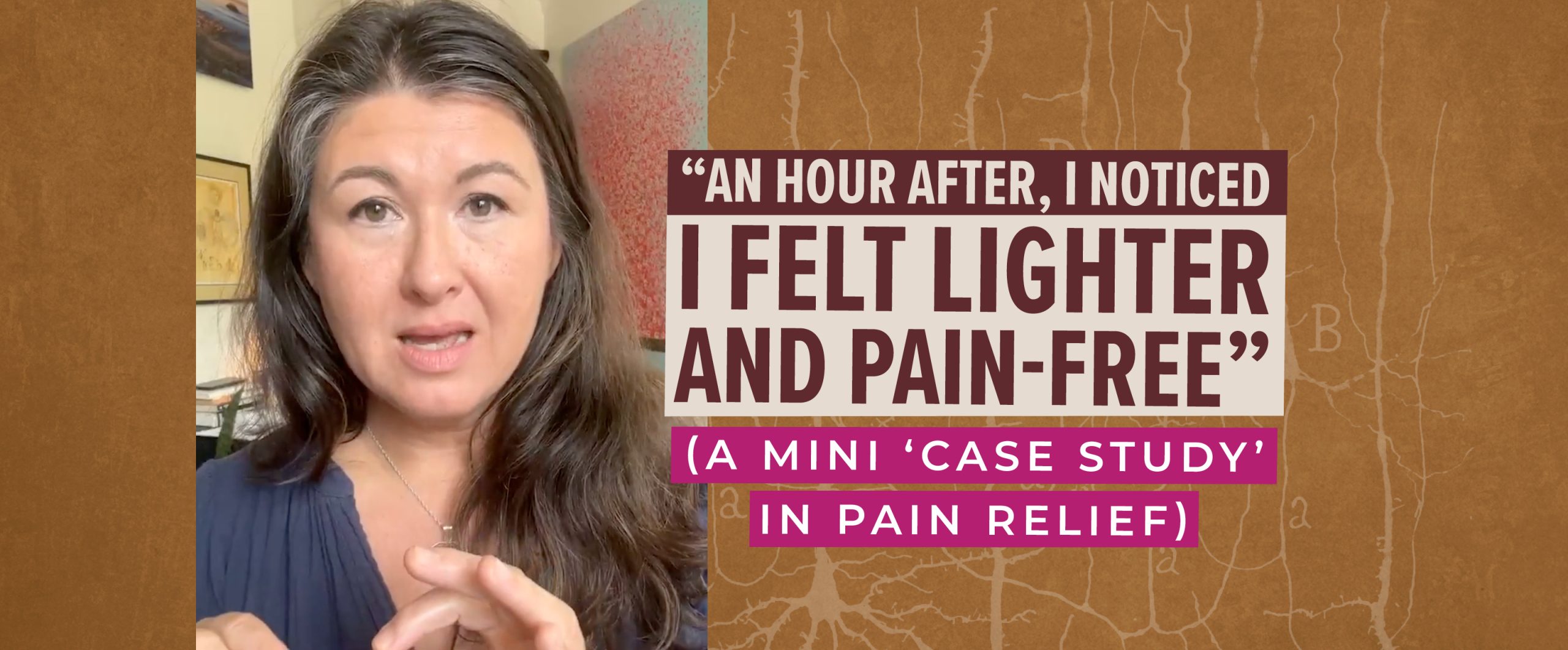
*There are plenty of great testimonials on the site, but don’t miss this amazing pain relief testimonial from a 21 Day member that I shared on Instagram earlier this year.
2. Test-drive some of my low-cost resources ($19 per class).
Here are a few that I suggest:
Dropping Into Your Nervous System Via Your Sensory-Motor Systems
Tracking Somatic Experience With Touch, Intention & Attention
Here’s to less pain and REAL relief that lasts!
Irene.